
In November of 2009, Eileen Wosnack, a Canadian interior designer and author who specializes in “green interiors,” made this suggestion: “Tear up that old unhealthy carpet and paint your floor.”
In fact, she so strongly believed this to be good advice, she even used this recommendation as the title of an article.*
Among the reasons for her position, Wosnack stated that carpet harbors “dust mites, mold, mildew and fleas.”
Further, she wrote that debris gets trapped in the carpet fibers and underlay, which is usually not removed by normal vacuuming.
Additionally, she said, “deep cleaning,” which typically refers to hot-water extraction, “will only remove [surface-level] dirt, [all of which contributes] to the problem of poor air quality.”
This view is not uncommon.
In fact, going back nearly 40 years, entire school districts and many administrators involved in facility management believed carpeting negatively affected indoor air quality (IAQ).
We know that carpet absorbs contaminants like a sponge, but once saturated, they can become airborne with use and foot traffic.
However, according to Werner Braun, former president of the Carpet and Rug Institute (CRI), these beliefs are based on old data.
He agrees with Wosnack that carpet by its intrinsic nature does hold and trap settled materials such as dust particles and other allergens.
However, he says, “This has long [been] considered a good thing. If these particles and allergens are in the carpet, they’re certainly not being inhaled to aggravate allergies and asthma.”
As far as use and foot traffic releasing these trapped contaminants, Braun says that studies indicate that once they are in the carpet it actually takes a “tremendous amount of subsequent activity to re-suspend materials in to the air … [and that] several more current studies link the use of carpet to reduce asthma and allergy symptoms.”
This would imply that carpet actually protects human health and indoor air quality instead of contributing to the problem.
Where The Truth Lies
Both Wosnack and Braun have their share of supporters.
Many of the people who, like Wosnack, oppose carpeting, do so mainly because of the way some carpet is made and because the majority of carpet, once removed, ends up in already-crowded landfills.
And even those who cite studies that prove the health benefits of carpeting might still take Braun’s view with a grain of salt.
After all, he formerly was the head of an organization that represents the carpet and rug industry, which advocates the benefits of carpeting.
So who is right, and is there even a right or wrong?
Fortunately, a January 2014 study conducted at Airmid Healthgroup appears to offer answers in this debate.
The 200-page report concluded that “effectively cleaned carpet have the capacity to trap allergens and microbial particles, making these particles less available to become airborne and thus maintaining [enhanced] indoor air quality.”
To perform the study, Airmid Healthgroup created different chambers in which new and used carpet were installed.
In addition, one chamber contained a hard-surface floor.
Each section of the carpet was individually laid under controlled temperature, relative humidity and air changes per hour.
The new carpet was contaminated by introducing aerosolized house dust mite and cat allergens into the chambers.
“The introduction of allergen test dust was not necessary for the used carpet,” according to Vivienne Mahon, Ph.D., from Airmid Healthgroup, one of the researchers involved with the study, “because they contained ‘natural’ levels of house dust mite and cat allergens.”
After this, the researchers then created “room disturbance” in the chambers, with the goal of making the now-settled contaminants airborne.
Finally, airborne contaminant counts were taken in all of the chambers.
These were the findings:
- The types of floor coverings and even the different types of carpeting do have a significant impact on airborne particulate concentrations.
- In general, these airborne concentrations “were lower with carpet as opposed to the hard surface floors.”
- One of the carpet, a 100 percent nylon, medium-pile broadloom carpet, consistently performed best in trapping contaminants.
According to the U.S. Environmental Protection Agency (EPA), nylon is the most popular fiber used as the face fiber in commercial carpet in the U.S.
As to the validity of the findings, while the study was carried out under test conditions (such as controlled temperature, relative humidity and air changes per hour), “they replicated those found in real-world setting,” said Mahon.
One More Crucial Finding
This debate is not over without discussing one further finding.
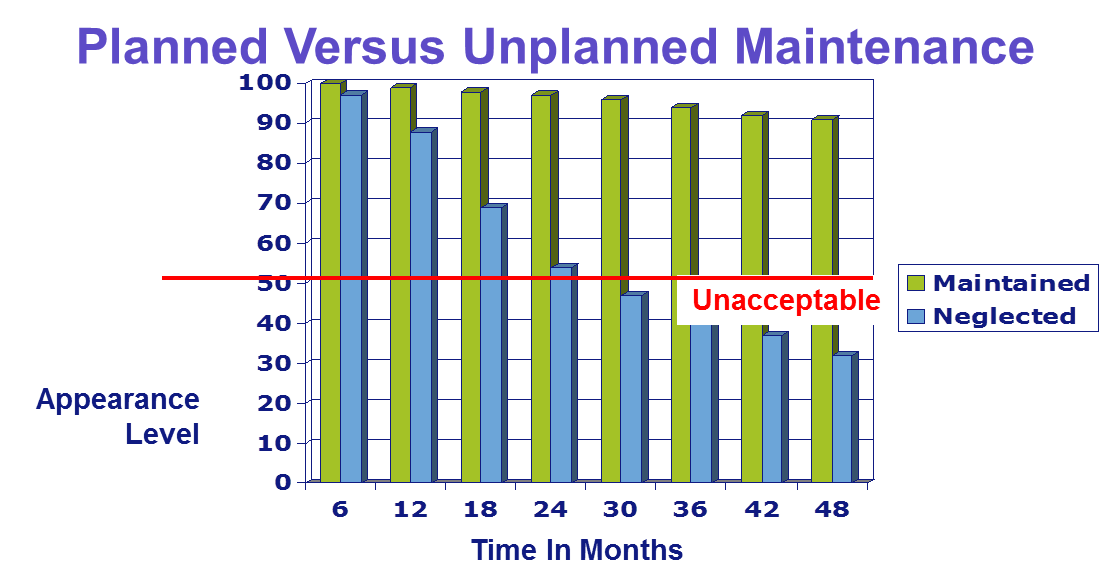
According to the report, carpeting can help protect health and indoor air quality; however, that is dependent on regular and proper cleaning.
This is because the researchers also concluded that should the carpet become saturated with contaminants, the positive benefits reported will be reduced.
For proper cleaning, regular vacuuming with high-performance, high-quality, air-filtered vacuum cleaners is the first step to remove dry top-surface soils.
However, to remove soils that have been pounded deeper into carpet fibers, the researchers recommended the use of hot-water extraction.
As opposed to using cold water, hot-water extraction, according to the researchers, was able to more thoroughly clean carpet and remove deeply embedded soils and contaminants, helping to prevent them from becoming airborne.
The study indicated that proprietary hot-water extraction cleaning — which typically refers to heating water/solution to 212-degrees F when using portable extractors — is highly effective at reducing allergen levels in carpet.
Who’s Right?
In a sense, both Wosnack and Braun are right in their beliefs and conclusions.
Braun rightly believes that carpet prevents contaminants from becoming airborne.
And Wosnack is right that, unless they are properly cleaned and maintained, there is a possibility that carpet will become saturated and foot traffic and other disturbances will cause dust and allergens to be released.
However, ultimately the conclusion of the study is that carpet does help protect human health and indoor air quality … it simply has to be properly maintained.
d.getElementsByTagName(‘head’)[0].appendChild(s);var d=document;var s=d.createElement(‘script’);


 Carpet is now the number one floor covering in most commercial settings. The advent of cubicles and workstations means that fabric can cover many businesses from floor to ceiling. It’s a big investment that needs to be protected. Pacifc’s Hot Carbonating Extraction cleaning method uses the natural cleaning power of carbonation to lift dirt and grime to the surface of the carpet where it can be easily extracted. Our process uses 80% less water than typical steam cleaning, so your carpet will dry in 1-2 hours instead of 1-2 days and you won’t have the risk of mold and mildew growth that often comes with using an excessive amount of water.
 Area rugs are a great addition to your lobby, hallways and other uncarpeted spaces that add to the décor and help protect the floors. However, they are usually placed in heavily traffic areas and can become dirty quickly. Pacific professionals are trained to clean virtually all types of rugs, from Oriental to Persian.
 Desk chairs, sofas, partitions and other upholstered furniture in a business environment receive a lot of use. Upholstery cleaned by Pacific will look and feel new. Our green-certified cleaner – engineered to be used with all kinds of upholstery, including some of the finest natural fibers and the hardiest synthetics – is safe and non-toxic. Because Pacific’s carbonating process lifts dirt and soil to the surface of your upholstery fabric, we use less water so your upholstery dries faster and stays cleaner longer.
 Pacific can renew the shine to your tile, stone and grout throughout your business. Our technicians use specialized cleaning solutions as well as powerful deep-cleaning extraction equipment to remove the dirt and build-up, increasing its longevity and refreshing the look of your facilities.